ddd
Virtual Lane Manager
The Virtual Lane Manager (VLM) software was developed to optimize logistics and streamline traffic management within a fleet management system. The core goal was to enhance the user experience for fleet operators, drivers, and dispatchers, allowing them to track, manage, and optimize routes effectively.

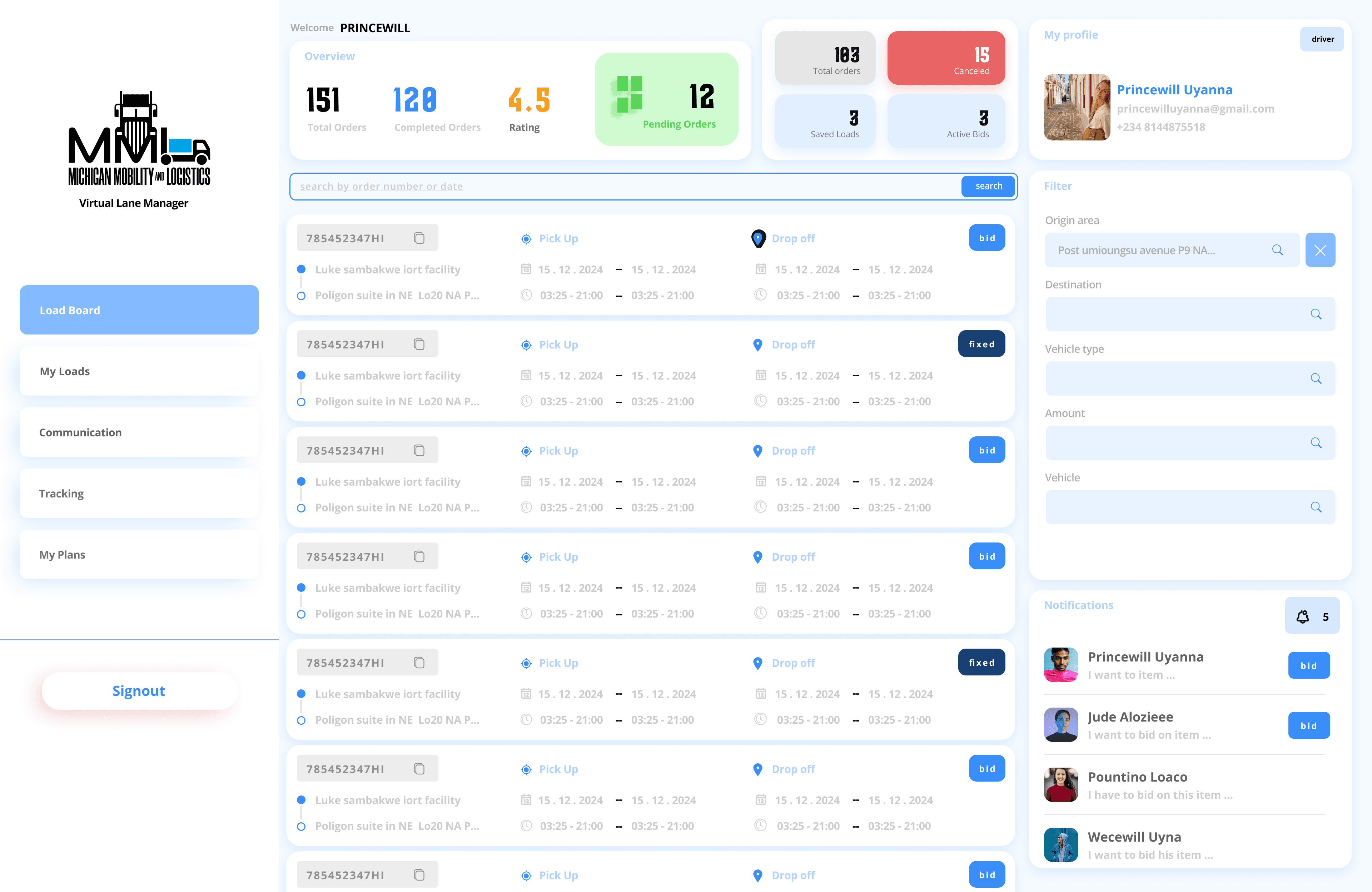
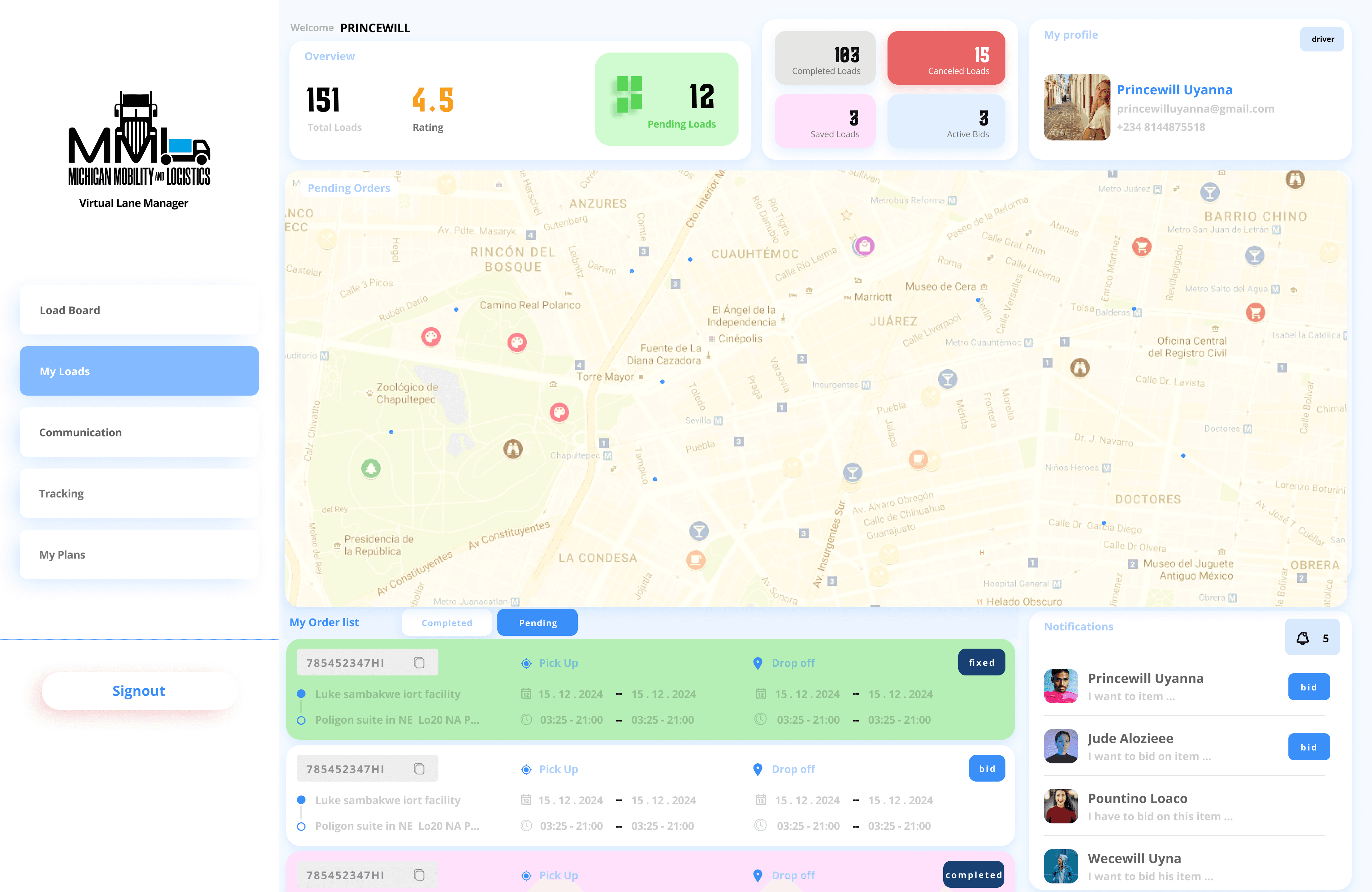
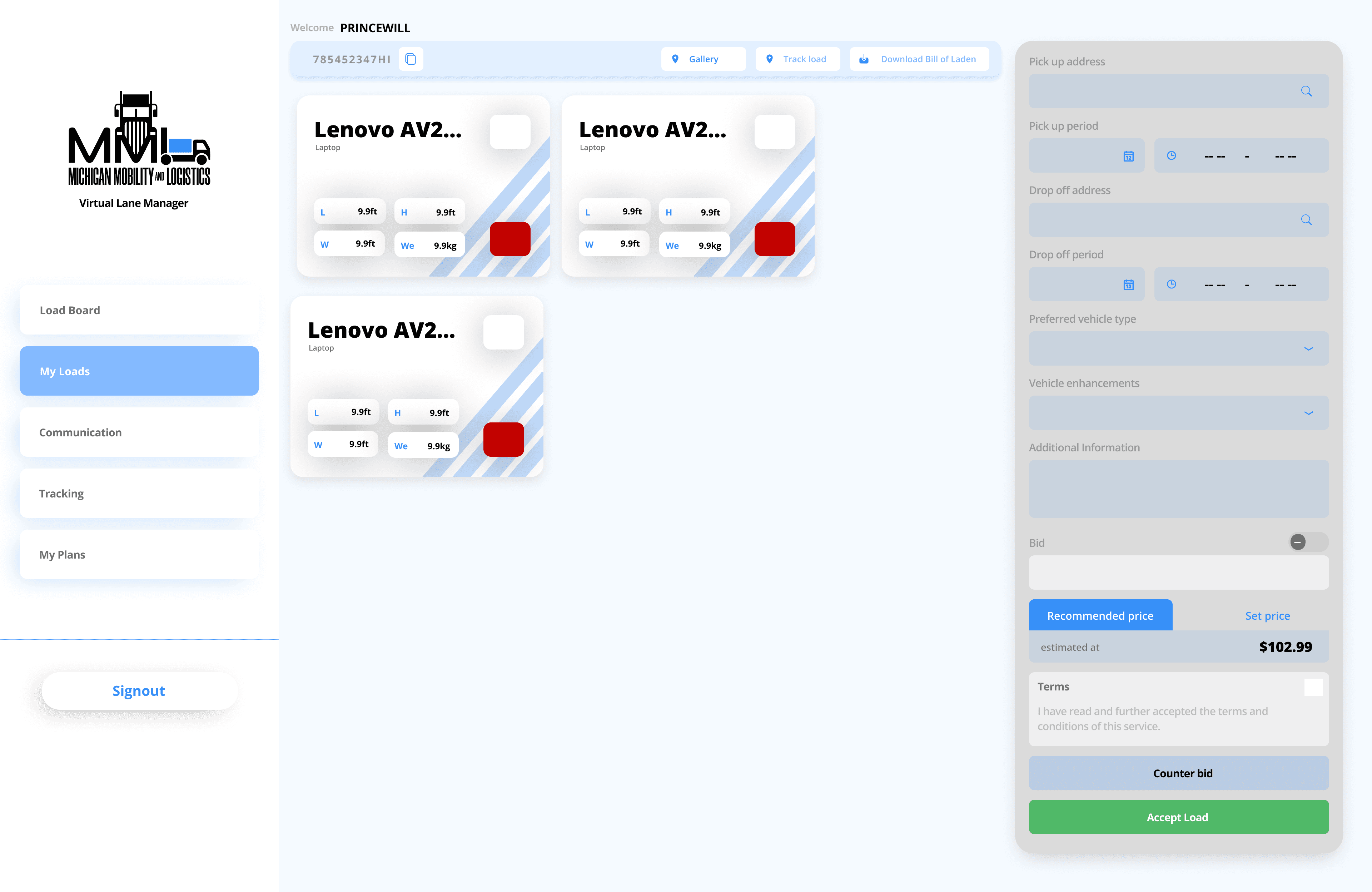
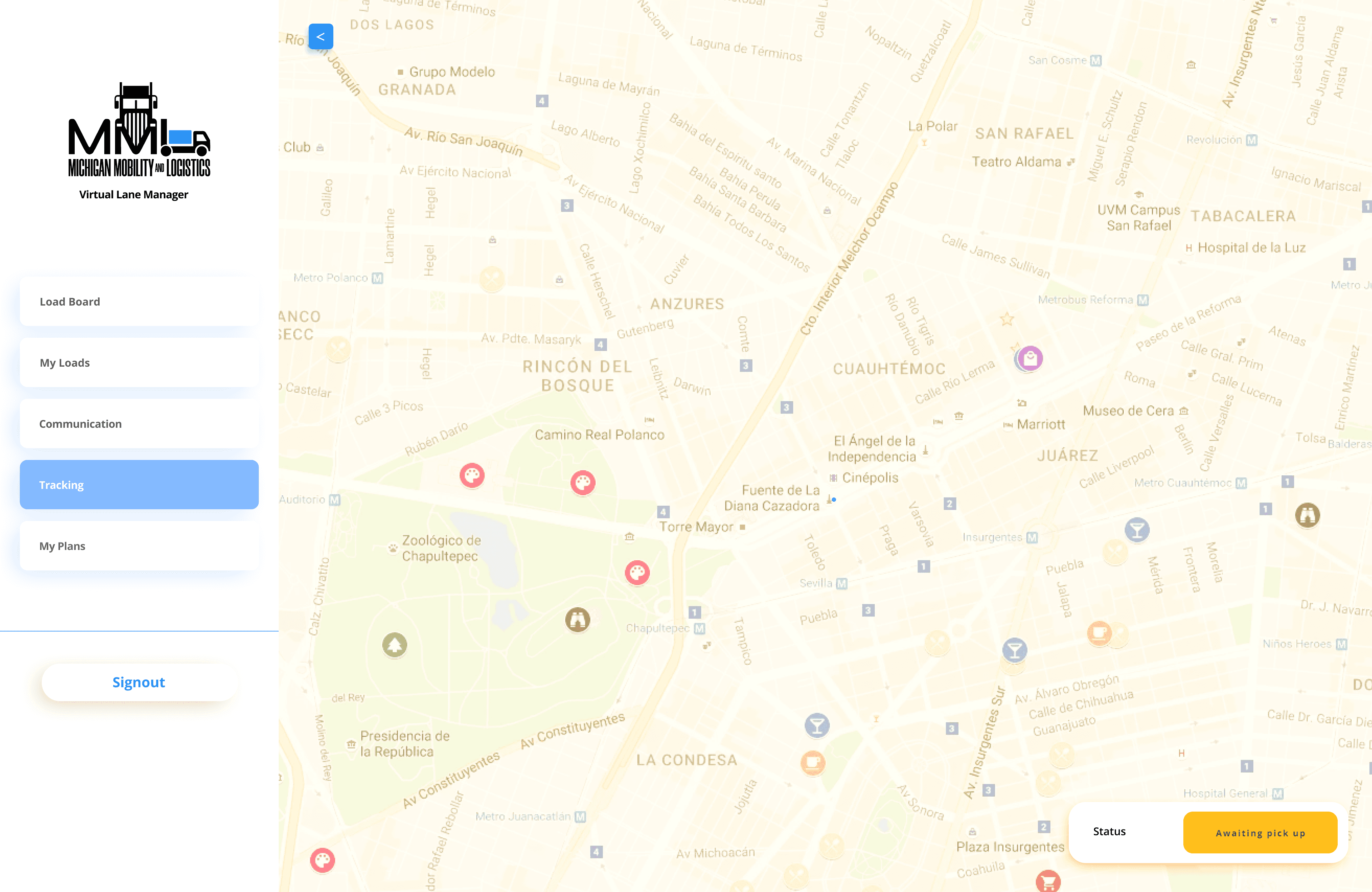
The initial challenge was to design a user-friendly interface that could integrate complex logistics data while providing real-time tracking, route optimization, and efficient communication between dispatchers and drivers. The key requirements were simplicity, clarity, and scalability to accommodate different levels of users and fleet sizes.
Fleet Operators: Responsible for managing multiple vehicles and routes.
Drivers: Who need real-time updates on their delivery lanes and task schedules.
Dispatchers: Who communicate directly with drivers and oversee operations.
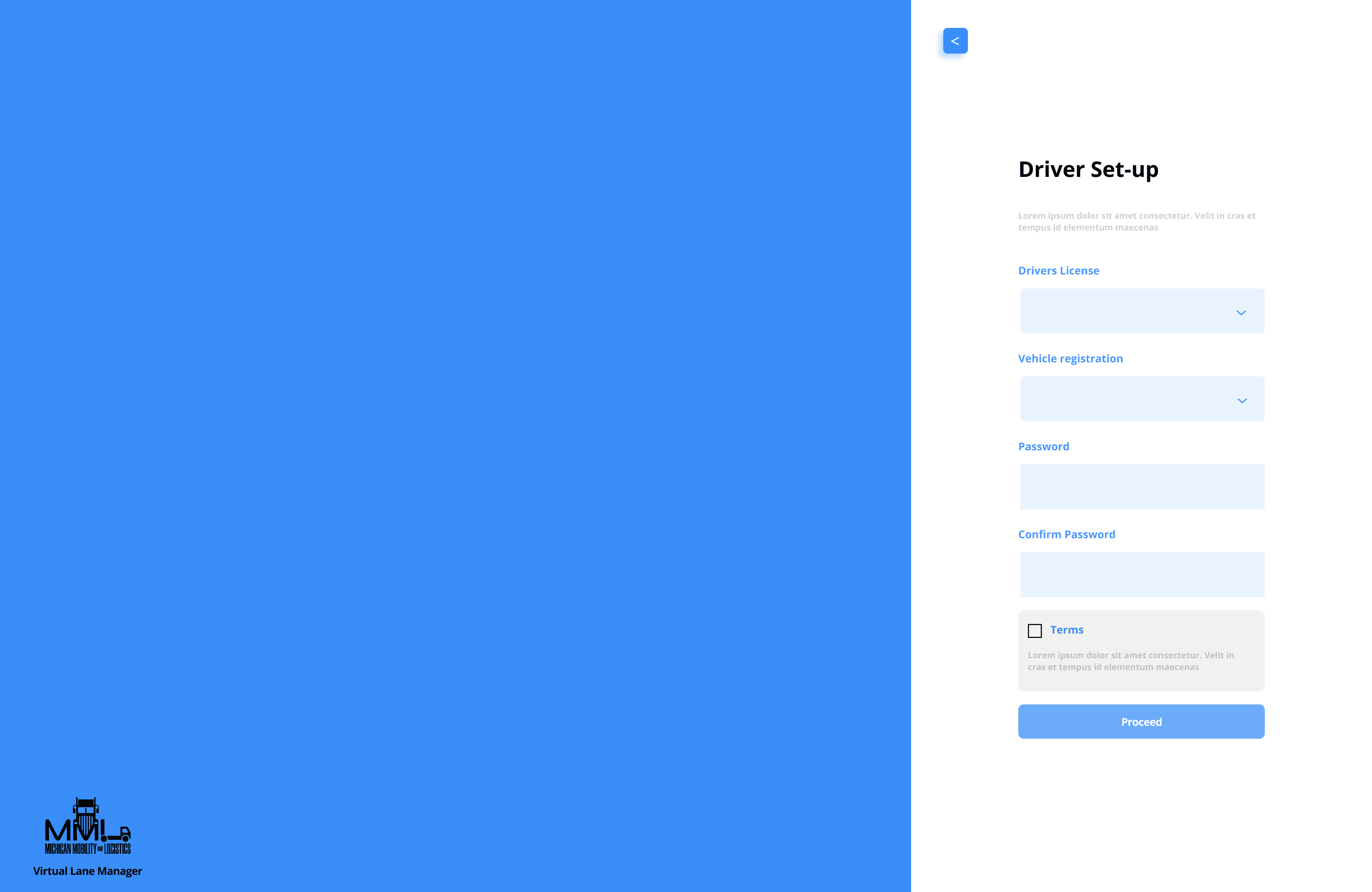
Driver Setup:
A clean and minimal interface for drivers to set up their profiles and log in.
Integration of vehicle details and route preferences.
User Research:
Extensive interviews and observation sessions with dispatchers, fleet managers, and drivers.
The key pain points identified were complex navigation, information overload, and slow communication in existing solutions.
Wireframes and Prototypes:
Multiple iterations of wireframes were tested with potential users to ensure clarity in the visual hierarchy.
Prototypes were built to simulate real-time interaction between dispatchers and drivers, optimizing feedback loops.
UI Design:
Clean, minimalistic design with a light color palette to reduce cognitive load for users who spend long hours on the platform.
Visual feedback for every action taken by the user (e.g., changing the route or updating delivery status).
Icons and typography were designed to be highly legible, even on smaller screens.
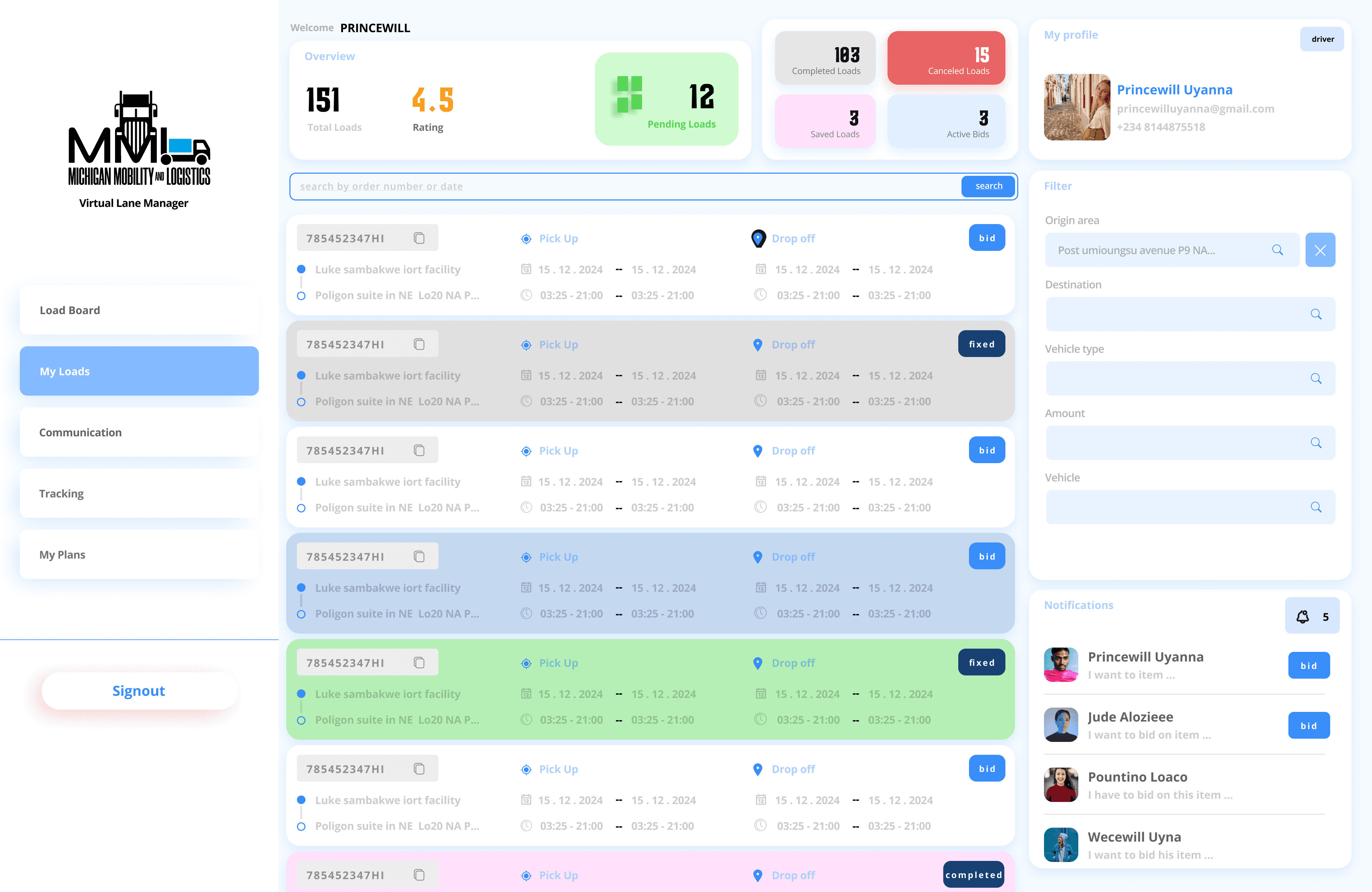
Dashboard Overview:
Centralized dashboard showing key metrics like:
Fleet availability.
Route status (completed, in progress, or delayed).
Driver performance and on-time delivery statistics.
Route Optimization:
Real-time route adjustments based on traffic conditions.
Color-coded route statuses to indicate efficiency or potential delays (green for on-time, red for delayed).
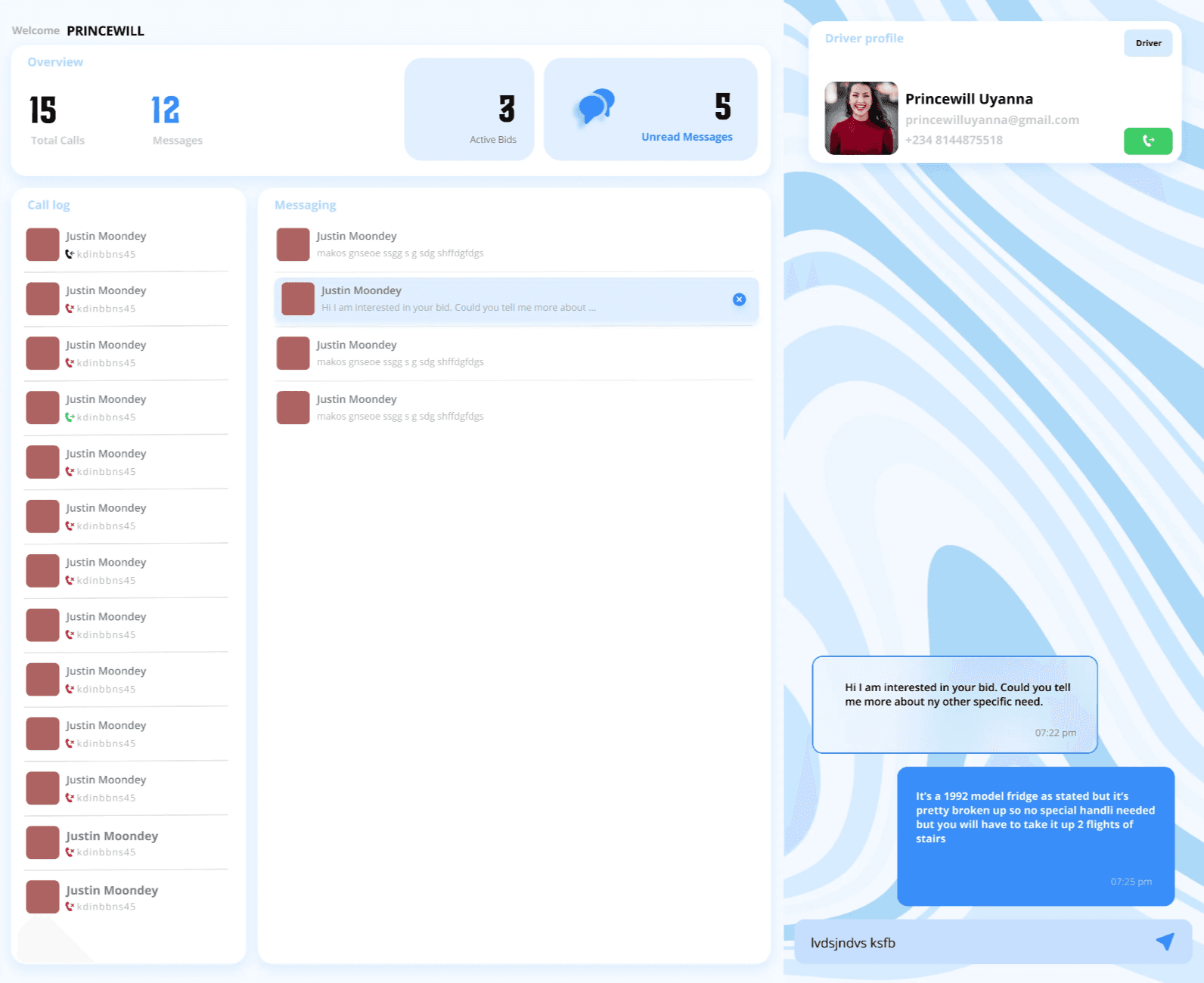
Communication Module:
Instant messaging system between dispatchers and drivers.
Alerts and notifications for any route changes or important updates.
Task Management:
Clear assignment of tasks for drivers.
Ability to view completed, pending, or ongoing tasks at a glance.
Geolocation and Tracking:
GPS tracking to monitor vehicle positions.
Map views that display the exact route taken by drivers and update in real-time.
Design Challenge:
Target Audience:
Design Process:
Key Features of the VLM: